Phoebe Stapleton , Ph.D., A.T.C.
Associate Professor
Rutgers UniversityEOHSI- Department of Pharmacology and Toxicology – Ernest Mario School of Pharmacy
Work Phone: 848-445-0142 -Office
Work Phone: 848-445-0113 – Lab
Work Email: stapleton@eohsi.rutgers.edu

Biography
Dr. Stapleton is an Associate Professor within the Department of Pharmacology and Toxicology of the Ernest Mario School of Pharmacy at Rutgers University. She currently serves as the Division Director for Environmental and Population Health Biosciences branch of EOHSI. Dr. Stapleton also serves within the Joint Graduate Program in Toxicology.
She received her B.S. in Biology and Athletic Training from State University of New York (SUNY) College at Cortland, a M.S.Ed. in Kinesiology from Southern Illinois University at Edwardsville, and a Ph.D. in Exercise Physiology from West Virginia University with a focus on microvascular physiology. She completed her postdoctoral training in inhalation nanotoxicology within the Department of Physiology and Pharmacology at West Virginia University.
Research Areas
The microcirculation branch of the cardiovascular system encompasses the arterioles, capillaries, and venules within an organ or tissue of interest. These highly active vessels serve to maintain homeostasis by regulating blood flow and tissue perfusion, thus providing nutrients and removing waste. Central to proper reactivity is the health and function of the endothelium, a single cell layer lining the vasculature. The Stapleton laboratory investigates the microvascular perturbations associated with normal physiological challenges (exercise or pregnancy), disease, and exposures to environmental and/or occupational xenobiotics.
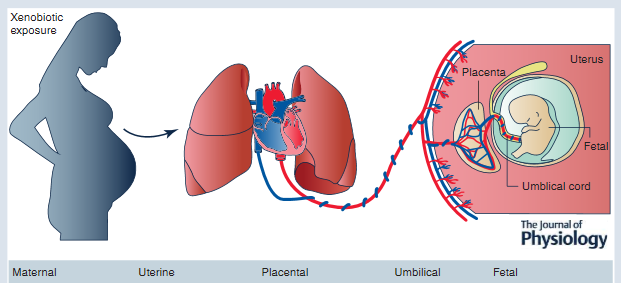
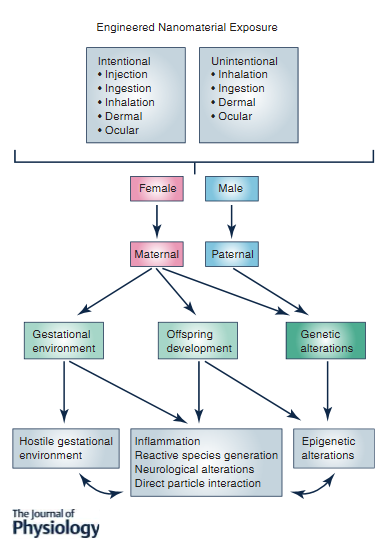
Our overarching research question is: how do particles inhaled during pregnancy affect the pregnant mother, fetal development, and offspring health with a focus on cardiovascular physiology. Within this umbrella, we have assessed exposure to micro- and nanoplastic particles and utilized engineered nanomaterials as a surrogate for ultrafine particulate matter with a keen focus on particle translocation, deposition, and cardiovascular perturbation. Our laboratory was previously supported by the Herbert W. Hoover Foundation and an NIEHS Outstanding New Environmental Scientist Award (ONES; NIH R01 ES031285). Our laboratory is currently supported by R01 ES036575.
Research Highlights
-
Inhaled particulate matter during pregnancy, micro- and nanoplastic particles (MNP) and nano-titanium dioxide, differentially impact placental development.
-
Inhaled micro- and nanoplastic particles (MNP) aerosols were found to alter inflammatory, cardiovascular, and endocrine activity in virgin female Sprague-Dawley rats.
-
Identified and visualized micro- and nanoplastic particles that have translocated from the maternal lungs or GI system to the fetal tissues 24h after pulmonary or gastric exposure, respectively, in late pregnancy.
-
Development of a novel placental perfusion technique to quantify material transfer from the maternal uterine circulation to the fetal umbilical circulation and measure biomarkers of uteroplacental function.
-
Identified and visualized nanoplastic particles are able to translocate from the maternal lungs to the fetal tissues after pulmonary exposure in late pregnancy.
-
Development of a novel intravital microscopy technique to visualize the vasculature of the pregnant uterus.
-
Identified microvascular dysfunction and behavioral alterations associated with engineered nanomaterial exposure in gestation.
-
Identification of the development of a hostile gestational environment after engineered nanomaterial exposure during pregnancy.
Awards/Recognition
-
Dr. Stapleton acted as the Society of Toxicology representative for the annual SOT-EuroTox debate (2026)
-
Dr. Chelsea Cary was awarded the Doctoral Student Merit and Achievement Award from the Rutgers School of Graduate Studies (2026)
-
Ms. Talia Seymore was an invited Symposium Speaker for the session Battle of the Sexes: Sexually Dimorphic Reponses to In Utero Toxicant Exposures, presenting: “Exposure to Particulate Matter Causes Sex-Specific Effects on Placental Metabolism” at the Society of Toxicology conference (2025)
-
Ms. Samantha Adams received 1st place in the Mid-Atlantic SOT Trainee Poster Presentation (2025)
-
Ms. Talia Seymore received an NIH New Investigator Travel Award and was a finalist for the Trophoblast Research New Investigator Award, International Federation of Placental Association (IFPA) (2025)
-
Dr. Stapleton was awarded the Biomedical and Health Sciences Dean’s Award from the School of Graduate Studies, Rutgers University (2025)
-
Ms. Samantha Adams received the competitive Bristol-Myers Squibb Graduate Fellowship (2024-2025)
-
Dr. Stapleton was appointed as Chair of the NJ DEP Drinking Water Quality Institute (2024)
-
Ms. Talia Seymore placed for the Trophoblast Research New Investigator oral presentation, International Federation of Placental Association (IFPA) (2024)
-
Dr. Stapleton was awarded the Society of Toxicology (SOT) Achievement Award (2024)
-
Ms. Chelsea Cary’s manuscript (Single inhalation exposure to polyamide micro and nanoplastic particles impairs vascular dilation without generating pulmonary inflammation in virgin female Sprague Dawley rats) was awarded the Impact Award for the Cardiovascular Toxicology Specialty Section and the Best Manuscript Award for the Occupational and Public Health Specialty Section of SOT (2024)
-
Ms. Talia Seymore received 1st place in the Mid-Atlantic SOT Trainee Poster Presentation (2025)
-
Laboratory publication, Ingested polystyrene micro-nanoplastics (MNPs) translate to placenta and fetal tissues in pregnant rats identified as top 1% of NIEHS papers published in 2023
- Ms. Chelsea Cary awarded the Rutgers School of Graduate Studies Aaron Shatkin Graduate Award (2023)
- Ms. Talia Seymore was a finalist for the Trophoblast Research New Investigator Award, International Federation of Placental Association (IFPA) (2023)
- Ms. Chelsea Cary was awarded a Kirschstein-NRSA (F31-ES035256) pre-doctoral fellowship from NIEHS (2023)
-
Ms. Chelsea Cary and Talia Seymore were each awarded a Diversity Initiatives Career Development Award from SOT (2023)
-
Dr. Stapleton was awarded the Women in Toxicology (WIT) Outstanding Young Investigator award (2023)
-
Ms. Talia Seymore placed 2nd in the poster session for the International Particle Toxicology Conference held in Santa Fe, NM (2022)
- Laboratory publication, Maternal, placental, and fetal distribution of titanium after repeated titanium dioxide nanoparticle inhalation through pregnancy identified as top 1% of NIEHS papers published in 2022
- Mr. Andrés D. Rivera Ruiz was awarded the SOT Undergraduate Diversity Award in 2021 for his work as an 2020 Virtual SURF trainee.
-
Dr. Stapleton received the Outstanding New Environmental Scientist (ONES) Award from NIEHS (2021).
-
Ms. Chelsea Cary won the Graduate Student Trainee Award from the Cardiovascular Toxicology Specialty Section of the Society of Toxicology (SOT) (2021).
-
Dr. Stapleton received the New Career Scientist Award from the Reproductive and Developmental Toxicology Specialty Section of the Society of Toxicology (SOT) (2021).
-
Ms. Jeanine D’Errico (King) was awarded the WIT Vera W. Hudson and Elizabeth K Weisburger Student Scholarship Award (2020)
-
Dr. Stapleton received the 2020 Young Investigator Award from the Inhalation and Respiratory Toxicology Specialty Section of the Society of Toxicology (SOT).
-
Dr. Stapleton and her collaborators were awarded the 2019 Best Paper of the Year, published in Particle and Fibre Toxicology. Their manuscript, ‘Maternal Engineered Nanomaterial Inhalation During Gestation Alters the Fetal Transcriptome’, represents the best cutting-edge research published in the journal. The paper was selected by the journal’s Editorial Board and is scored by its citations, downloads, and impact in the year. This award-winning manuscript can be found here and more information about the journal Particle and Fibre Toxicology can be found here.
-
Ms. Charlotte Love was awarded a Pfizer SOT Undergraduate Travel Award based on her 2018 SURF fellowship (2019)
-
Ms. Jeanine D’Errico (King) was awarded a Bristol-Myers Squibb Summer Internship within the department of Drug Safety and Evaluation within the Molecular Toxicology group (2017)
-
Dr. Stapleton was an invited speaker to the NIEHS 50th Anniversary Celebration with SOT titled SOT and NIEHS Past, Present, and Future: 50 Years of Collaboration (2016)
In the News
-
Interviewed for NIEHS podcast, “Understanding Exposures to Microplastics and Nanoplastics”, by Ashley Ahearn
-
Interviewed for and quoted in Chemistry World (magazine of the Royal Society of Chemistry) article “Discovery of microplastics in people raises concerns about health implications”, written by Anthony King
-
Interviewed for and quoted in Food & Wine magazine, “Why you shouldn’t microwave your food in plastic containers, according to toxicologists and an epidemiologist”, by Korin Miller
- Identified as one of the top 13 Food & Wine articles of 2024
-
Interviewed for documentary, “One Huge Tiny Problem”, Black Seven Creative and David Roofthooft
-
Interviewed for NBC News NOW, Live Broadcast (segment at 39:42), by Savannah Sellers and Joe Fryer
-
Interviewed by WABC 7, “Is bottled water safe to drink? Expert weighs in on ‘nanoplastics’ and latest study”, by Josh Einiger
-
Interviewed by Corus National Radio (Canada) “A Little More Conversation”, “How much plastic are we ingesting when drinking bottled water”, by Ben O’Hara-Byrne
-
Interviewed by CNN, “Bottled water contains thousands of nanoplastics so small they can invade the body’s cells, study says,” by Sandee LaMotte
-
Interviewed for Associated Press, “Scientists find about a quarter million invisible nanoplastic particles in a liter of bottled water”, by Seth Borenstein
-
Interviewed for NJ 101.5, “NJ researchers find disturbing level of tiny fragments in most bottled water”, by Dino Flammia
-
Interviewed for US Vogue, “Is there a Eco-Friendly Way to have Glitter in Our Makeup?” by Tamar Adler
-
Interviewed for Canadian Broadcasting Corporation radio show, Quirks and Quarks, for feature “Plastic pollution and disease — ‘Plasticosis’ is a new plague for wildlife”, by Sonya Buyting
- Guest for TVO Television show, The Agenda with Steve Paikin, “Are We Becoming Plastic People”, hosted by Steve Paikin and produced by Eric Bombicino
- Interviewed for Bon Appétit magazine, “How Much Microplastic Am I Eating? And Is There Any Way to Avoid It?” written by Alison Francis
- Interviewed for EHP Science Selection, “Breach of Security? Placental uptake of micro- and nanoplastic particles” by Silke Schmidt
- Interviewed for Radio Health Journal, “What You Should Know About Ingesting Microplastics”, produced by Kristen Farrah
- Interviewed for and quoted in The Guardian article “Plastic particle pass from mothers into fetuses, rat study shows”, written by Damian Carrington
- Guest for National Public Radio (NPR), WHYY radio show Radio Times, “What to know about plastics and our health”, hosted by Tracey Matisak and produced by Debbie Bilder
- Interviewed by People Magazine, Earth Day Issue, “What This Scientist Says You Need to Know About Hundreds of Thousands of Plastic Particles in Your Drinking Water (Exclusive)”,by Johnny Dodd
- Interviewed for US Vogue, “The Latest Thing to Optimize? Your Drinking Water”,by Tamar Adler
- Interviewed for NJ Spotlight News, estimates, study says”, by Briana Vannozzi
- Interviewed for MedicalNewsToday, “Massive number of plastic particles found in bottled water. Are they harmful to health?”, by Robby Berman
-
Interviewed by NPR Here and Now, “Plastic bottles shed invisible nanoplastics, study finds”, by Deepa Fernande
-
Interviewed for CBS Evening News with Norah O’Donnell, “Bottled water contains up to 100 times more plastic than previously estimated, new study says”, by Aliza Chasan
- Phoebe Stapleton, Ph.D., A.T.C. featured in the Plastic Soup Foundation series “Inhale, Exhale” in Netherlands – February, 2021 —WATCH SEGMENT
- Dr. Stapleton and her collaborators were featured in The Guardian’s story “Plastic particle pass from mothers into fetuses, rat study shows“.
-
Phoebe Stapleton, Ph.D., A.T.C. featured in Consumer Reports: How to Eat Less Plastic. May 5, 2020
-
Interviewed for and quoted in The Washington Post newspaper article “Hoovering the Ocean”, written by Hugo Kugiya